
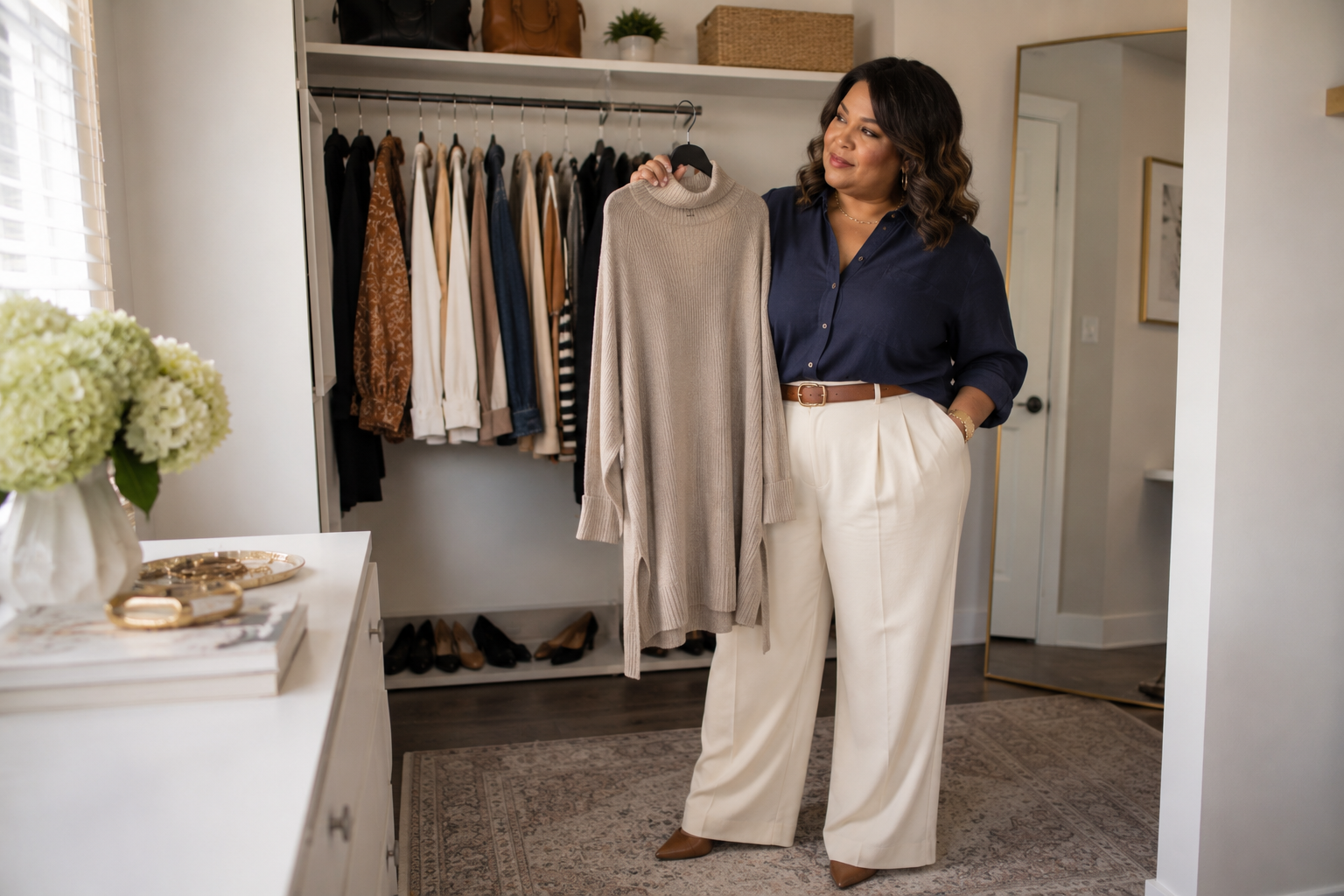
GLP-1 medications are transforming more than waistlines. They're changing how women shop, how retailers manage inventory, and perhaps most importantly, how women see themselves.
Much of the conversation around medications like Ozempic, Wegovy, and Zepbound focuses on pounds lost and sizes dropped. But what happens when your body changes so quickly that your wardrobe—and your self-image—struggle to keep up?
When your body changes rapidly, your clothes don't just stop fitting. Your identity can feel out of sync, too. One day your favorite jeans fit perfectly and the next they're sliding down your hips. The experience can feel exciting, validating, and surprisingly disorienting because your body is evolving faster than your mind can fully process.
Style Isn't a Reward for Reaching Your Goal
One of the biggest mistakes I see women make during significant weight loss is postponing style until they reach their goal weight. I'll hear things like, "I'll buy clothes when I lose another twenty pounds," or "I don't want to spend money on clothes I'll only wear for a few months," or "I'll wait until I'm done."
But the problem is, life doesn't pause while you're losing weight.
You still have meetings to attend, life to live, vacations to take, and photos you'll want to be in. And when nothing fits properly, many women begin to withdraw. They may stop going out, avoid pictures, or put off shopping altogether. Instead, they settle for oversized clothing that no longer reflects who they are.
Style isn't something you earn once you arrive at a certain number on the scale. It's a tool that can help you navigate the journey.
Stop Relying on Size. Start Relying on Measurements.
If you're losing weight rapidly, one of the best investments you can make is a simple tape measure. Most women know their weight, but far fewer know their measurements.
We all know that sizing varies dramatically from one brand to another. A size 10 in one retailer may fit like a size 12—or an 8—in another. And when your body is changing rapidly, measurements become far more reliable than the number on a clothing tag.
Track your bust, waist, hips, and inseam every few weeks. You'll make better purchasing decisions, reduce costly returns, and gain a clearer understanding of how your body is changing.
Measurements tell the truth. Sizes don't.
Don't Overlook Your Bras
One of the first things I discuss with women during a significant weight-loss journey is investing in foundational items like underwear, shapewear—when appropriate—but especially bras.
As weight comes off, your bra size often changes, and often before you realize it. Yet many women continue wearing bras that are too large because they don't think to reassess their fit. And this significantly impacts the way their clothing fits.
A well-fitting bra affects everything from the way a blouse drapes to how a jacket sits on your shoulders. It can improve posture, create better proportions, and help you feel more comfortable throughout the day.
Yes, purchasing multiple bras during the process can feel expensive. But if your body is changing significantly, it's one of the smartest investments you can make.
When buying bras during a weight-loss journey, look for styles that fit snugly on the outermost hook. As you continue losing weight, you'll be able to tighten the band and extend the life of the bra before needing another size adjustment.
Your Shape May Change, Not Just Your Size
Many women assume that weight loss simply creates a smaller version of the body they already have. But in reality, that's often not what happens.
Weight doesn't always come off evenly.
You may lose weight around your midsection before your hips, or your bust may remain relatively unchanged while your waist becomes more defined. That's why clothing silhouettes that once worked beautifully may no longer feel right.
Because you're not simply getting smaller—you're being reshaped.
This is where paying attention to fit, proportion, and silhouette becomes more important than ever.
Create a Wardrobe Transition Plan
If you're using GLP-1 medications—or considering them—don't just plan for the cost of medication, nutrition, and fitness. Plan for your wardrobe, too.
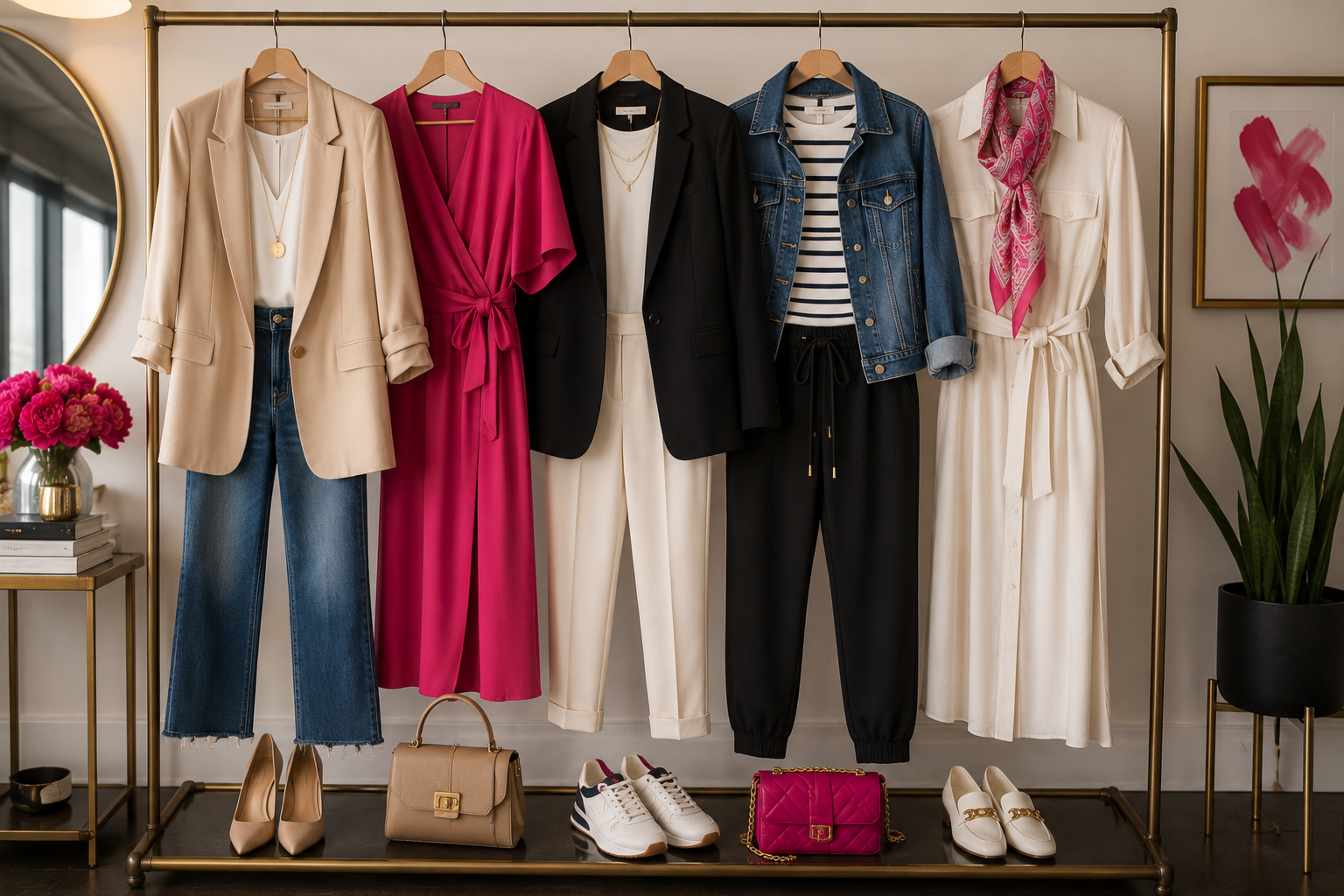
Many women are surprised by how quickly clothing stops fitting and how often certain pieces need to be replaced during periods of rapid weight loss. Rather than rebuilding your entire closet at every size, create a small wardrobe budget and focus on building what I call a bridge wardrobe—a collection of versatile pieces designed to carry you through periods of change.
Look for styles with built-in flexibility, such as wrap dresses, shirt dresses, knit blazers, stretch denim, belted styles, and elastic-back trousers. These pieces can often accommodate multiple sizes and provide longer wear as your body evolves.
If cost is a concern, consider thrift, consignment, and secondhand stores for high-quality transitional pieces. During a period of rapid change, there's often little reason to pay full price for items you may only wear for a season. The goal isn't to build a perfect wardrobe. It's to create a thoughtful strategy that helps you look polished, feel comfortable, and stay connected to your style throughout the journey.
Tailoring Is Your Secret Weapon
Many women assume tailoring is only for expensive clothing, but that's far from true. When used strategically, tailoring can actually save you money and extend the life of your wardrobe.
A blazer that's slightly too large can often be reshaped. Trousers can be taken in. Dresses can regain structure and definition. Small adjustments can make an existing garment look custom-made and help you feel more polished without replacing everything in your closet.
That said, not every piece is worth altering. As a general rule, garments that are more than two sizes too large are often difficult and costly to tailor successfully. At that point, replacement is usually the more practical investment.
For simple alterations such as hemming pants, shortening sleeves, or taking in a waistband, a reputable local dry cleaner can often do excellent work. For more complex projects—such as resizing a blazer, reshaping a dress, converting a dress into a skirt, or significantly reconstructing a garment—it's worth seeking out a skilled tailor or seamstress who specializes in custom alterations.
Tailoring can be a way to help your wardrobe evolve alongside you. The right alterations can buy you valuable time during body changes, improve the fit of pieces you already love, and help you get more value from the clothes you already own.
Keep Your Style Identity Intact
One thing I encourage women to avoid during periods of significant weight loss is becoming overly focused on the size itself.
Your style is bigger than a number.
You may be losing weight, but you're also gaining clarity about who you are today. This can be an opportunity to reassess what you want your wardrobe to communicate.
Ask yourself questions like:
Do I want to appear more polished?
More creative?
More modern?
More authoritative?
Instead of rebuilding your wardrobe solely around a smaller size, rebuild it around the woman you're becoming.
Don't Wait for the Finish Line
The women I work with are often surprised when I tell them that weight loss doesn't automatically create confidence. But dressing with intention can.
The right clothing helps your mind catch up to your reflection. It helps you feel comfortable in a body that's changing. And it reminds you that transformation doesn't have to mean invisibility.
So don't wait until you reach your goal weight to invest in yourself.
Your Body Is Changing. Your Style Strategy Should Too.
Navigating a rapidly changing body can feel overwhelming, especially when you're trying to balance fit, budget, professional image, and the emotional adjustments that often accompany significant weight loss.
That's exactly why I created The Style Reset experience. Designed for women navigating life transitions—including weight loss, career changes, empty nesting, retirement, and other major milestones—the program helps you make thoughtful wardrobe decisions, identify what still works, determine what needs to be replaced, and create a clear strategy for moving forward.
Together, we'll evaluate your current wardrobe, identify gaps, develop a personalized shopping plan, and ensure your clothing continues to align with the woman you are today—not the woman you were six months ago.
If you're navigating a GLP-1 weight-loss journey and would like guidance on creating a wardrobe strategy that evolves with your changing body, schedule a discovery call to learn more about The Style Reset and how we can work together.
Your wardrobe should support transformation. Not make it harder.
I look forward to working with you.
With style and gratitude,
-Lauren
Enjoyed this article? Join our newsletter for thoughtful insights on style, professional presence, and the realities of getting dressed in today's world.