
Why are we so afraid to talk about appearance?
We spend billions of dollars on skincare, cosmetic treatments, fitness, fashion, hair restoration, and countless other ways to maintain or change our appearance. Men and women alike invest considerable time and money in how we look.
Yet when the conversation turns to how appearance influences professional perception, we suddenly become uncomfortable, particularly when we're talking about women.
“People should judge me by my abilities.”
“What I wear has nothing to do with how well I do my job.”
I understand the sentiment…
Our expertise, character, and accomplishments deserve recognition regardless of what we're wearing. But we also know that appearance influences perception, and I don't think we're doing anyone a service by pretending otherwise.
What I find particularly interesting is how often conversations about professional appearance are framed as though women are the only ones expected to think about what their clothing communicates.
They're not.
Men are subject to professional appearance standards, too. Those standards may look different, and the consequences of violating them aren't necessarily equal, but the underlying principle applies to everyone.
Professional Presence and the Perception of Authority
During a recent presentation for the New Castle County Chamber of Commerce, I shared an anecdote about Stephen Squeri, now chairman and CEO of American Express.
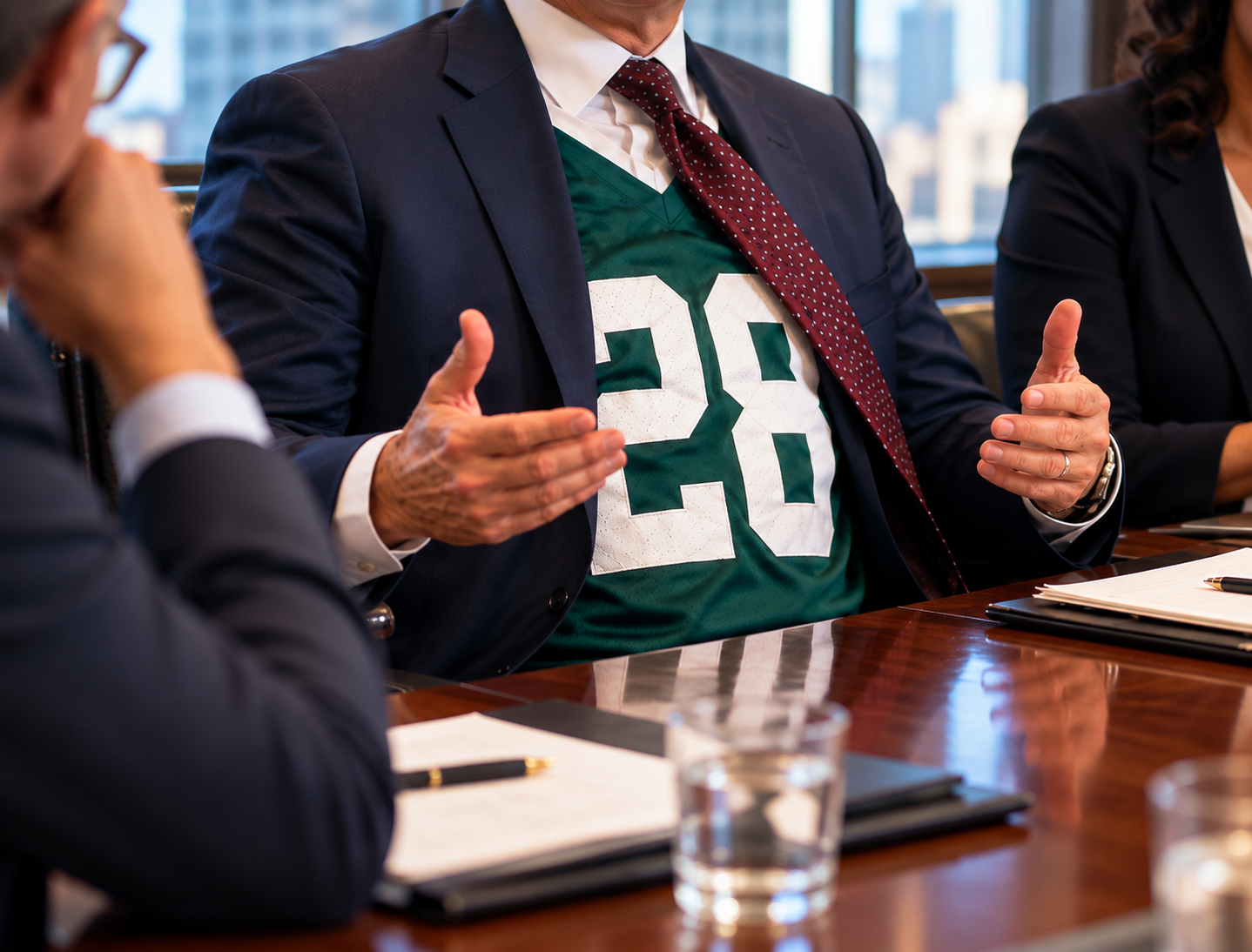
Earlier in his career, Squeri reportedly had a reputation for wearing inexpensive, ill-fitting clothing, and once wore a New York Jets jersey beneath his suit to a meeting. Leadership reportedly told him he wasn't "dressed like a CEO." And an image professional was brought in to help him elevate the visual part of his professional brand.
Think about that for a moment…
Here was a highly capable executive whose appearance didn't align with the expectations of what leadership should look like. His abilities hadn't changed, but the visual information he was providing influenced how he was perceived.
This is precisely why I believe professional presence deserves more attention.
There's a school of thought that accomplished professionals shouldn't concern themselves with projecting authority because their qualifications and contributions should be enough. It's an appealing argument, but it overlooks how people actually form impressions and how careers advance.
Not everyone has the same access to influential relationships, professional networks, or opportunities that can accelerate a career. We all, however, have some ability to influence how we present ourselves.
Our visual identity is part of how people make sense of who we are. What we wear, how we communicate, and how we carry ourselves contribute to the impressions others form about our credibility, competence, and authority.
We can't control every assumption people make about us, but we can be intentional about the signals we send. That deserves the same consideration we give to developing our skills, building relationships, and managing our careers.
Of course, we should question who establishes professional appearance standards, whose appearance is automatically associated with authority, and why some people must work harder than others to be taken seriously. Those conversations are necessary, especially when race, gender, age, and other biases influence professional opportunities.
“But questioning the standards doesn't require us to dismiss the influence of appearance.”
Why are we so reluctant to discuss professional appearance?
I suspect some of the resistance comes from the belief that caring about how we present ourselves somehow diminishes our intelligence, independence, or substance.
I've never understood why those things should be mutually exclusive.
We routinely consider our language, tone, body language, and communication style in professional settings. We prepare for presentations, think about how we introduce ourselves, and make deliberate choices about how we interact with colleagues and clients.
Why should the visual identity component of our respective professional and personal brands be excluded from that consideration?
most of us weren’t taught how to dresS
We learned to put on clothes as children, but understanding fit, proportion, color, personal style, and what clothing communicates in different settings requires knowledge that many of us never received.
Instead, we picked up rules along the way, often without questioning where they came from or whether they made sense for us.
Women have been told to avoid certain silhouettes because of their body shapes, cover their arms after a certain age, or dress in ways that make them appear more authoritative. I've worked with women who avoided particular styles for decades because of something someone said years earlier, only to discover that the clothing needed adjusting, not their bodies.
Men have their own version of this conditioning.
Consider the familiar tech bro starter pack that includes the quarter-zip or fleece vest, chinos, and minimalist sneakers. The tech industry helped popularize a more relaxed approach to workplace attire, and that casual aesthetic became its own kind of uniform.
What's interesting is that even in industries that pride themselves on rejecting traditional corporate dress codes, a new set of expectations often takes their place. The quarter-zip and fleece vest may communicate something very different from a tailored suit, but both can signal belonging, credibility, and an understanding of the professional environment.
And that's the larger point. Every workplace has visual expectations, whether they're written into a dress code or simply understood by the people who work there. Those expectations influence how we perceive one another, regardless of gender, position, or industry. We can challenge them, redefine them, or choose not to follow them, but we should at least understand them.
If we're going to be intentional about how we communicate, build relationships, and advance our careers, our visual identity deserves a place in that conversation.
Please comment below and let me know what you think!
Is your professional imAGE SUPPORTING THE IMPACT YOU WANT TO MAKE?
Whether you're leading an organization or navigating your own professional and personal evolution, how you show up matters.
Let's explore how a more intentional approach to professional presence and personal style can support your goals.
With style and gratitude,
Lauren
Lauren M. Simmonds
Founder | The Fearless Fashionista®
Professional Presence & Style Strategist
Author | Speaker | Podcast Host
Explore Ways to Work With Me
Connect on LinkedIn | Follow on Instagram